
Used Leaps are sold as “Leap” with no version, and the two generations are different chairs with different prices. This guide covers the differences most sources agree on, flags the details where they contradict each other, and tells you how to confirm what you are really buying.
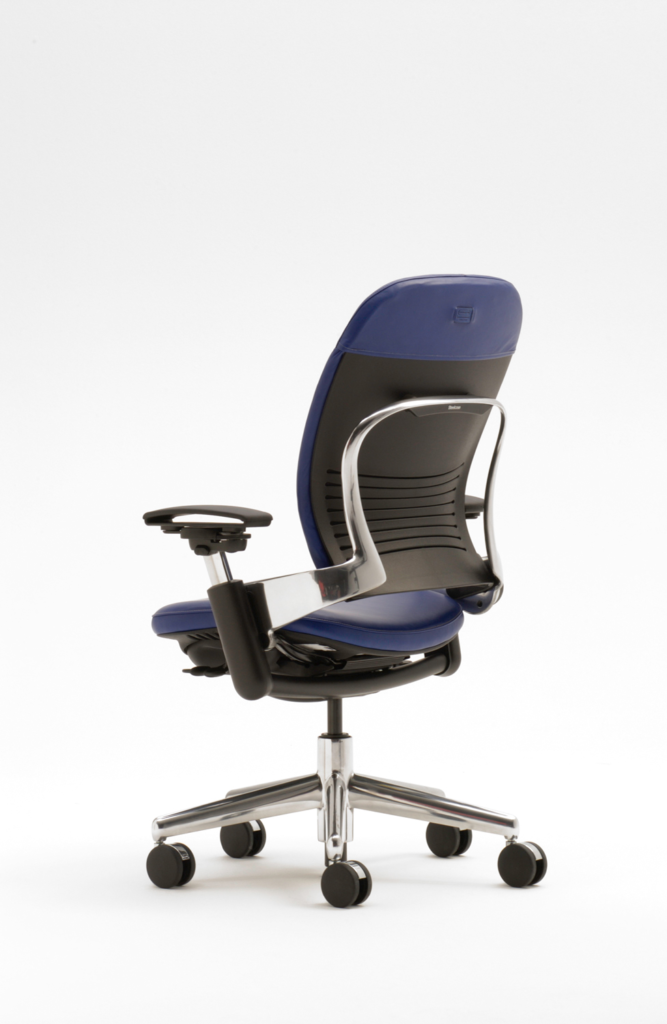

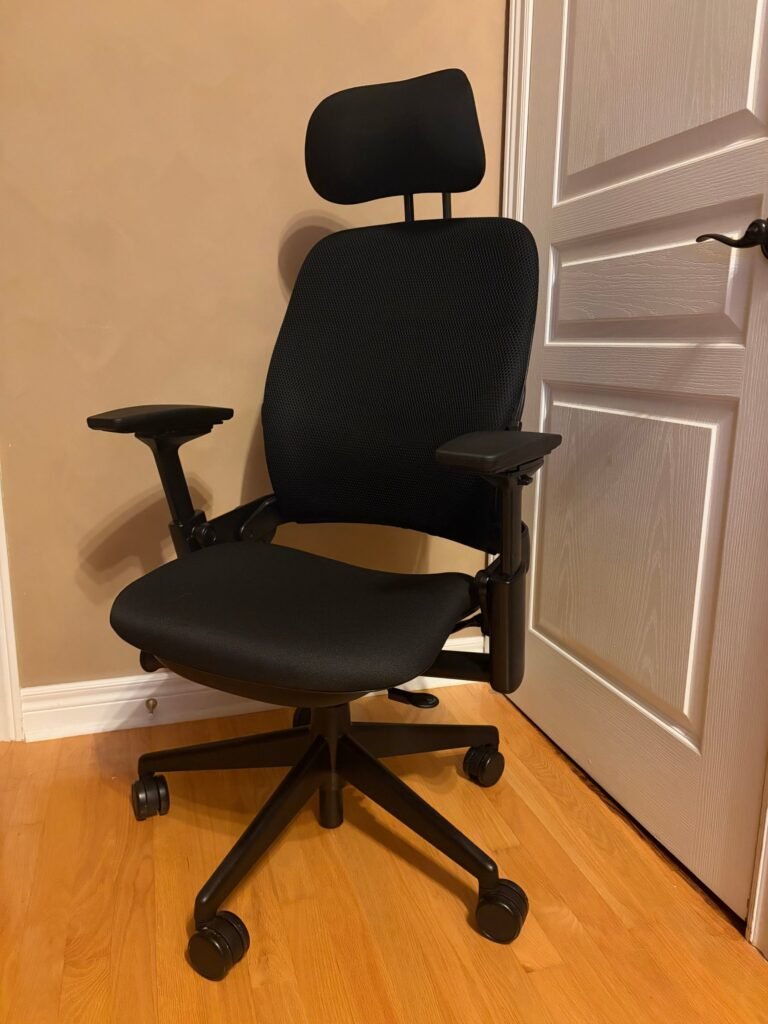

The short answer
- The V1 came first (1999) and the V2 followed in 2006, according to ChairsFX. Both are listed at a 400 lb capacity.
- Most comparisons credit the V2 with 4D arms, a seat depth slider as standard and a slimmer, more modern build.
- The V1 has thicker seat and back padding, which some owners prefer.
- If you buy used, test the actual chair. Sellers mix up the versions and online guides disagree on several details.
Side by side
| Feature | Leap V1 | Leap V2 |
|---|---|---|
| Arms | 3D (height, width, pivot) | 4D, adds depth |
| Seat depth adjustment | On some builds only | Standard |
| Seat and back padding | Thicker, rounder | Slimmer, flatter |
| Base | Described as heavier steel encased in plastic | Described as lighter plastic (aluminum optional) |
| Weight capacity | 400 lb | 400 lb |
The table follows ChairsFX’s comparison, which also describes the V1 as more padded and “tank-like” and the V2 as lighter and more refined. Seller guides from Crandall Office Furniture agree that the V2’s pads are thinner, and note that many people consider that the V2’s one real downgrade.
Where the sources disagree
Several details are reported differently, so do not rely on any of these alone to identify a chair:
- Arm pad shape. ChairsFX and one Crandall guide describe V1 pads as rounder or oval and V2 pads as flatter or rectangular. A parts seller’s guide says the opposite.
- Base strength. ChairsFX calls the V1 base heavier. A competitor’s review page calls the V2 base and casters heavier-duty.
- Lower-back firmness knob. One review says only the V2 has it. Crandall lists it among the V1’s features.
- Parts. One review says V1 parts must come from refurbished chairs. Crandall’s catalog has separate parts collections for V1 and V2.
When sources contradict each other, a photo of the actual chair and a hands-on test beat any rule of thumb.
The V1 Highback
Some V1 chairs came with a taller back. Crandall describes it as taller than the standard V1 and slightly taller than the V2, with thicker padding than either. Taller users, particularly those over six feet, are the ones most likely to notice the extra height.
Which should you buy used?
- Pick the V2 if you want 4D arms and a guaranteed seat slider, or if you want the more commonly sold version.
- Consider a V1 if you value thicker cushioning and find one in good condition at a clearly lower price. ChairsFX lists second-hand V1 chairs from around $200, but check live listings because prices vary.
- Either way, run the tests in our used Leap checklist before paying.
How to confirm which one you are buying
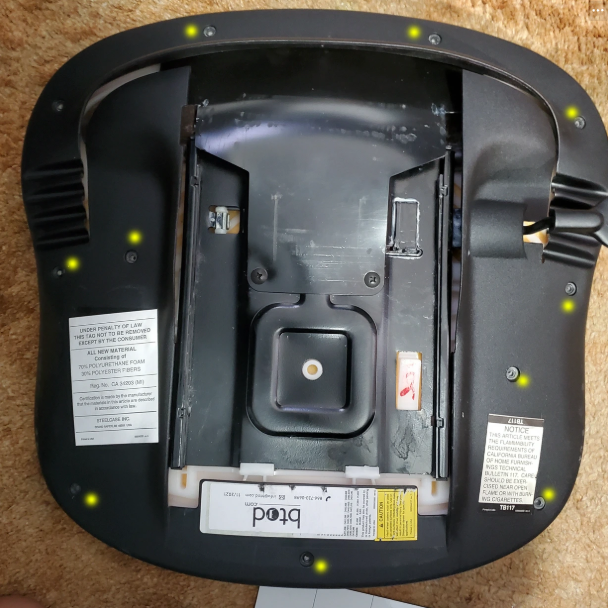
- Ask for photos of the front, side, arms and underside, plus any labels.
- Test the arms: the V2 should also slide forward and back.
- Look for a seat lever on the left. A missing lever points to a fixed-seat V1.
- Compare the padding thickness with photos of confirmed V1 and V2 chairs.
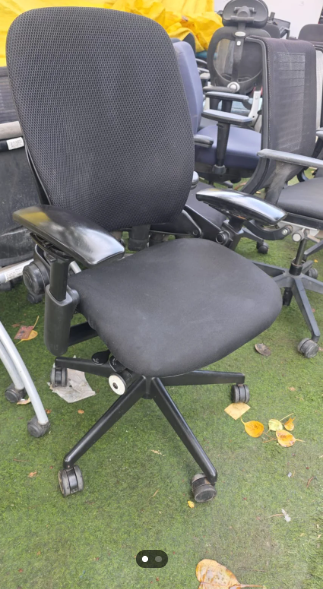
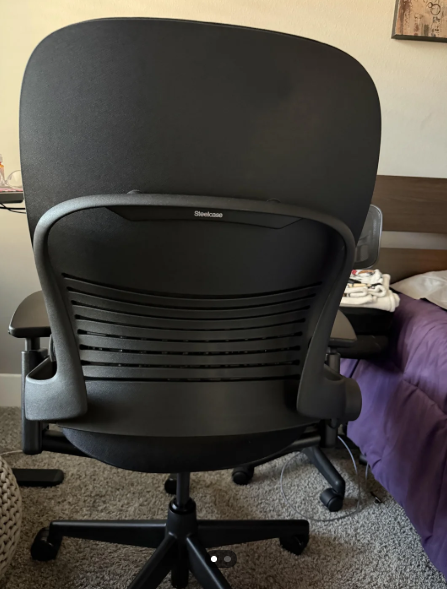
The photos below show the kinds of views worth asking a seller for: the front, the back with its badge, and the underside of the seat.
Prices and availability change. Read our affiliate disclosure to see how this site is funded.
Leave a Reply