Author: admin

  • Used Steelcase Leap V2: Buying Guide and Inspection Checklist

    The Steelcase Leap is one of the most common ergonomic chairs on the second-hand market, which also means it is easy to buy a tired one. This checklist walks you through what to confirm and test before you pay, whether you are looking at a private listing, an open-box return or a refurbished chair.
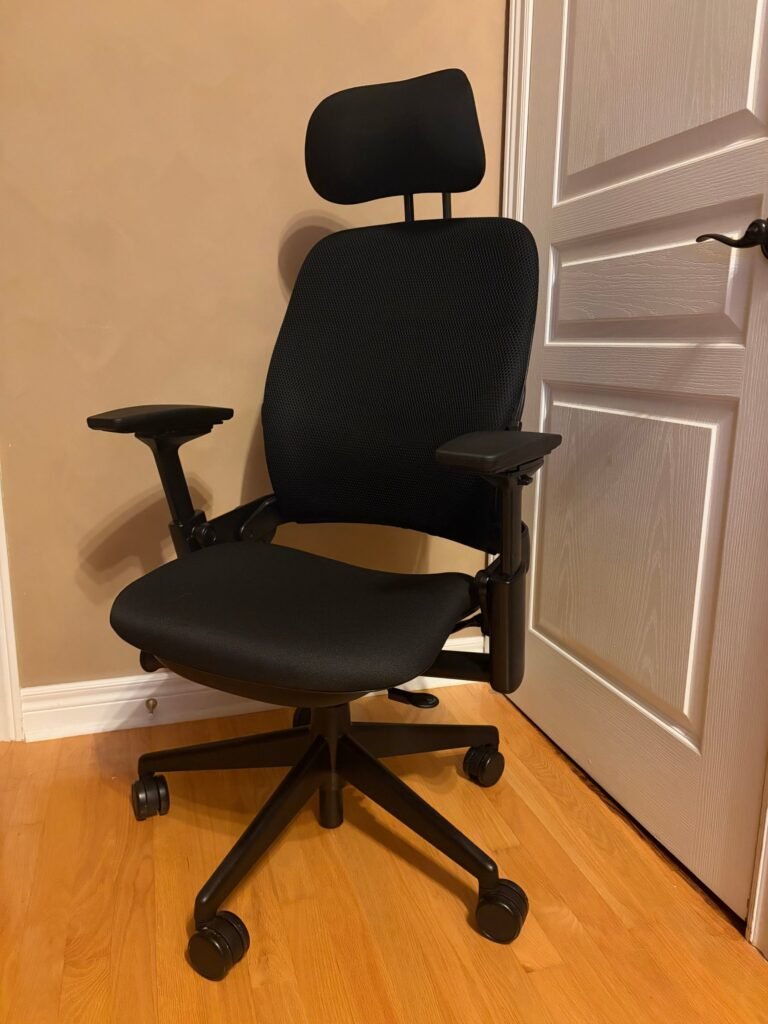
    Black Steelcase Leap V2 office chair fitted with a headrest above the backrest.
    Steelcase Leap V2 with the optional headrest. Photo by ScriptDoggie, via Wikimedia Commons. CC BY-SA 4.0.

    The short version

    • Confirm exactly which Leap you are buying (V1 or V2) from photos or in person, not from the listing title alone.
    • Run every adjustment: height, recline tension, tilt lock, seat slider, lower back firmness, lumbar and arms.
    • Treat worn fabric and scuffs as cosmetic. Treat a chair that sinks, will not swivel freely or has controls that do not work as a reason to walk away or negotiate hard.
    • If the chair is refurbished, ask what was replaced and with what parts, and get the warranty and return terms in writing.

    Step 1: Confirm it is really a V2

    Sellers often use “Leap” loosely, and the two generations are priced differently, so check before you commit. Be careful with advice online: sources disagree on details such as arm pad shape, so do not rely on a single visual cue.

    Features that guides describe for the V2 include a waterfall-style front seat edge, a sliding seat and 4D arms on chairs that have the adjustable arm option. Some V1 chairs have a fixed seat with no slider lever, so a missing seat lever points to an older chair. Ask the seller for photos of the front, side and underside, including any labels, and compare them with Steelcase’s own images.
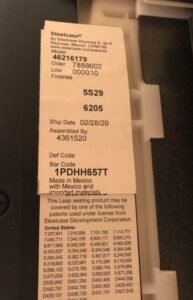
    Steelcase label showing model 46216179 and ship date 02/28/20.
    A Steelcase identification label, the kind worth asking a seller to photograph. This one lists the model number (46216179) and a ship date of February 28, 2020. Photo used with permission.

    For a side-by-side look at how the two generations differ, and where sources disagree, see our Leap V1 vs V2 comparison.

    Step 2: The 10-minute function test

    1. Height lever and gas cylinder. Raise and lower the seat with the lever on the right side. It should move smoothly and hold its height with you sitting on it. If it slowly sinks, the cylinder needs replacing.
    2. Seat swivel at the lowest height. One reviewer who tested a used V2 found the seat struggled to turn on its own at the lowest setting while it spun smoothly higher up. Check the swivel at several heights.
    3. Recline tension. Turn the tension knob both ways and recline. The effort should clearly change.
    4. Tilt lock. Use the paddle on the right to lock the chair fully back, half back and upright. The flexible back can still give a little when locked upright, which is normal.
    5. Seat slider. Lift the lever on the left and slide the seat forward and back. Confirm it moves and holds position.
    6. Lower back firmness. Find the knob at the rear right of the back and turn it. The feel of the back shell should change.
    7. Lumbar support. Slide it up and down and check it stays where you put it.
    8. Arms. Confirm whether the chair has 4D arms or height-only arms, then move every adjustment the arms offer. Make sure nothing wobbles or slips.
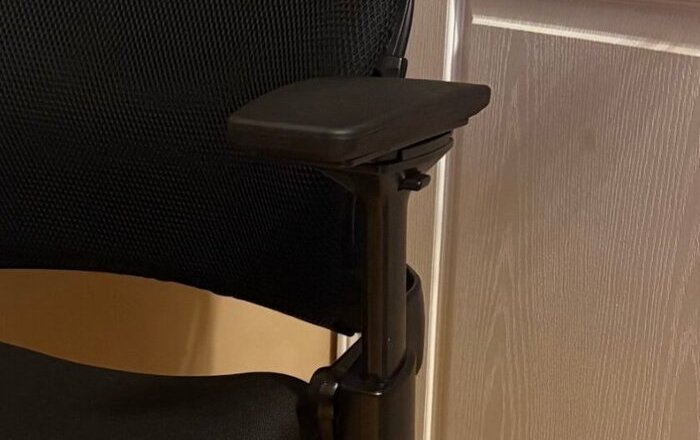
    Black Leap V2 arm pad and the small button beneath it on the upright support.
    The arm height button sits beneath the arm pad. Cropped from a photograph by ScriptDoggie, via Wikimedia Commons. CC BY-SA 4.0.

    Can’t find a control? The seat-depth lever is on the left under the seat: lift it and the seat should slide and then lock where you leave it. The lower back firmness knob is at the rear right of the backrest: turning it should change how firm the lower back feels. The recline tension knob is turned to make leaning back easier or harder: give it several turns each way and recline after each, and the effort should clearly change. The Steelcase Leap brochure shows where each control sits. If you cannot see the chair in person, ask the seller for a short video of each control being used.

    Cosmetic wear vs real problems

    A hands-on review of an older used V2 found scuffs on the cylinder, marks on the lumbar knob from bumping into a desk and visibly worn upholstery, while the arm pads looked almost new. Wear like that is normal for a chair that has seen years of use and is not a reason to reject it, though worn fabric is a bargaining point.

    Functional faults are different: a cylinder that sinks, a seat that will not swivel freely, or any control that does not do its job. Ask what a repair would cost before you decide, because parts and labor can erase the saving.

    If the chair is refurbished or renewed

    “Refurbished” and “renewed” mean different things from seller to seller. Before you buy, ask:

    • Which parts were replaced (cylinder, foam, upholstery, arm pads) and who made them?
    • Is there a warranty, how long is it, and who honors it?
    • What is the return window and who pays for return shipping on a heavy chair?
    • Can you see photos or video of the actual chair, not a stock image?

    The foam question matters. One buyer reported that a refurbished Leap with replaced foam became uncomfortable over time, so it is worth asking what was used and, if you can, sitting on the chair before you commit.

    Before you pay

    • Test in person, or ask for a short video of each function above.
    • Compare the total cost, including shipping and any parts, against buying a refurbished or new chair.
    • Keep proof of the listing and any promises the seller made.

    Prices and parts change, so confirm current details with the seller. Read our affiliate disclosure to see how this site is funded.
  • Steelcase Leap V1 vs V2: Key Differences and Which to Buy Used

    Used Leaps are sold as “Leap” with no version, and the two generations are different chairs with different prices. This guide covers the differences most sources agree on, flags the details where they contradict each other, and tells you how to confirm what you are really buying.

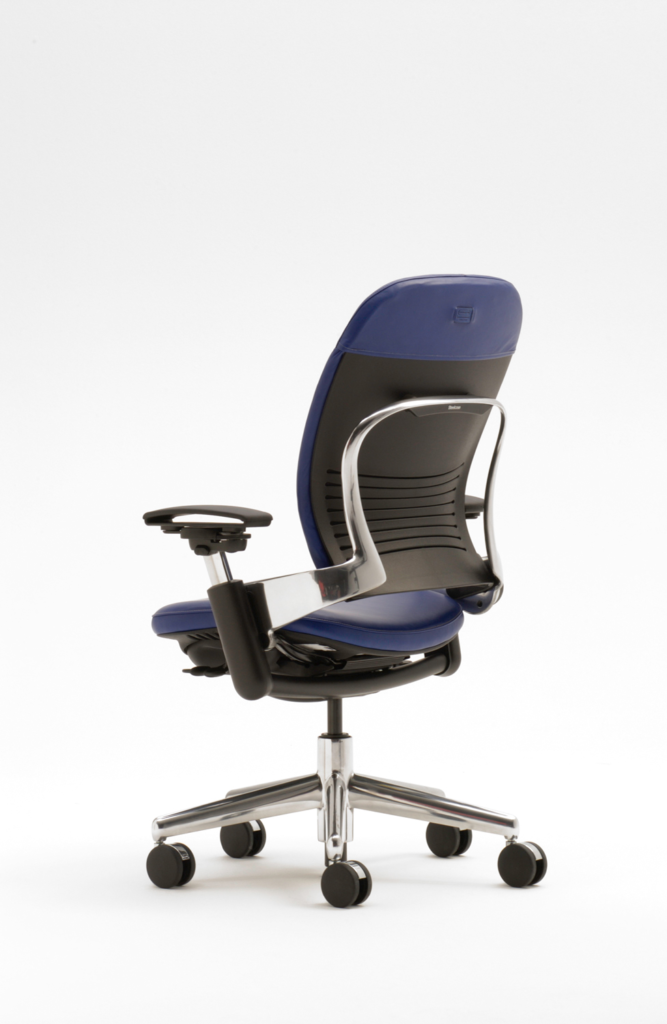
    Purple high-back Steelcase Leap with an aluminum back frame and open-sided arm supports.
    Original Steelcase Leap 462 in a high-back configuration, photographed in 1999. Photo by Steelcase Inc, via Wikimedia Commons. CC BY 3.0.
    Black Steelcase Leap V2 office chair fitted with a headrest above the backrest.
    Steelcase Leap V2 with the optional headrest. Photo by ScriptDoggie, via Wikimedia Commons. CC BY-SA 4.0.

    The short answer

    • The V1 came first (1999) and the V2 followed in 2006, according to ChairsFX. Both are listed at a 400 lb capacity.
    • Most comparisons credit the V2 with 4D arms, a seat depth slider as standard and a slimmer, more modern build.
    • The V1 has thicker seat and back padding, which some owners prefer.
    • If you buy used, test the actual chair. Sellers mix up the versions and online guides disagree on several details.

    Side by side

    FeatureLeap V1Leap V2
    Arms3D (height, width, pivot)4D, adds depth
    Seat depth adjustmentOn some builds onlyStandard
    Seat and back paddingThicker, rounderSlimmer, flatter
    BaseDescribed as heavier steel encased in plasticDescribed as lighter plastic (aluminum optional)
    Weight capacity400 lb400 lb

    The table follows ChairsFX’s comparison, which also describes the V1 as more padded and “tank-like” and the V2 as lighter and more refined. Seller guides from Crandall Office Furniture agree that the V2’s pads are thinner, and note that many people consider that the V2’s one real downgrade.

    Where the sources disagree

    Several details are reported differently, so do not rely on any of these alone to identify a chair:

    • Arm pad shape. ChairsFX and one Crandall guide describe V1 pads as rounder or oval and V2 pads as flatter or rectangular. A parts seller’s guide says the opposite.
    • Base strength. ChairsFX calls the V1 base heavier. A competitor’s review page calls the V2 base and casters heavier-duty.
    • Lower-back firmness knob. One review says only the V2 has it. Crandall lists it among the V1’s features.
    • Parts. One review says V1 parts must come from refurbished chairs. Crandall’s catalog has separate parts collections for V1 and V2.

    When sources contradict each other, a photo of the actual chair and a hands-on test beat any rule of thumb.

    The V1 Highback

    Some V1 chairs came with a taller back. Crandall describes it as taller than the standard V1 and slightly taller than the V2, with thicker padding than either. Taller users, particularly those over six feet, are the ones most likely to notice the extra height.

    Which should you buy used?

    • Pick the V2 if you want 4D arms and a guaranteed seat slider, or if you want the more commonly sold version.
    • Consider a V1 if you value thicker cushioning and find one in good condition at a clearly lower price. ChairsFX lists second-hand V1 chairs from around $200, but check live listings because prices vary.
    • Either way, run the tests in our used Leap checklist before paying.

    How to confirm which one you are buying

    • Ask for photos of the front, side, arms and underside, plus any labels.
    • Test the arms: the V2 should also slide forward and back.
    • Look for a seat lever on the left. A missing lever points to a fixed-seat V1.
    • Compare the padding thickness with photos of confirmed V1 and V2 chairs.

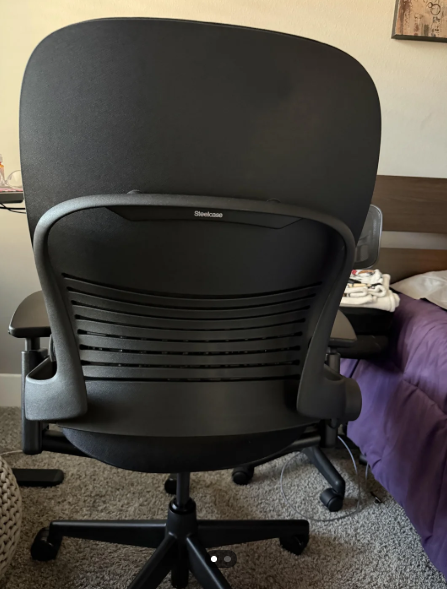
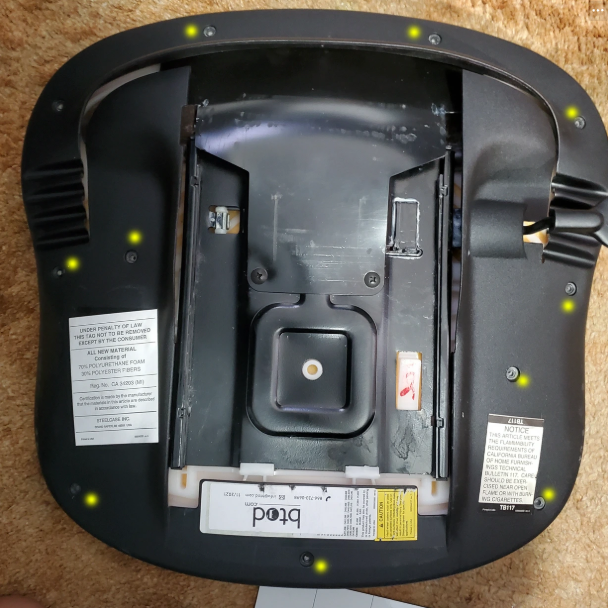
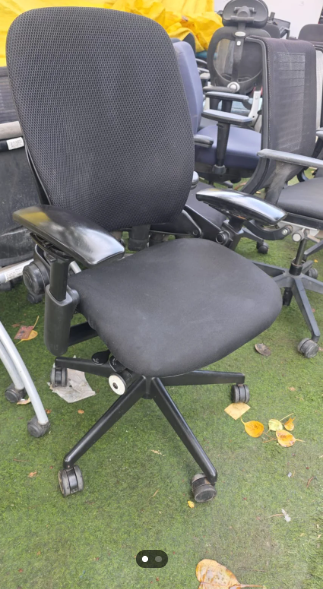
    The photos below show the kinds of views worth asking a seller for: the front, the back with its badge, and the underside of the seat.

    Black upholstered office chair with padded armrests and a five-star caster base among other chairs on green turf.
    Front view showing the seat upholstery, arm pads and caster base.
    Rear view of a black Steelcase chair with a curved support frame and horizontal slats across the lower backrest.
    Rear view showing the Steelcase badge and lower backrest construction.
    Underside of a detached chair seat with metal slide rails, labels and yellow dots marking screw locations.
    Seat underside showing the slide rails and marked fasteners.

    Prices and availability change. Read our affiliate disclosure to see how this site is funded.